Fighting Censorship with Cookies

I’ve participated in a number of efforts to fight the book banning initiatives that have reared up in various parts of the country. Last year, I testified before my town’s school committee on the dangers of restricting curricula and library access, worked with a national book arts collaborative to create single-sheet “zine” books on book banning challenges, and helped design book-banning related programs for libraries. I’ll describe these projects in future posts, but today I’d like to highlight the efforts of a seventh grader who recently completed a project that combines her passions for cooking and reading with her desire to bring attention to book banning.

Nutmeg is a seventh grader in a suburban community in Massachusetts.  For her bat mitzvah project she decided to make cookies inspired by banned books, sell them to neighbors and friends, and donate the proceeds to a non-profit organization that tracks challenges to books and provides resources to people who want to resist book banning in their communities. Last February, I interviewed Nutmeg about her project.

How did you come to the idea of making cookies that are inspired by banned books?

As part of our bat mitzvah preparation program, we were instructed to do something that benefits the community. I wrote down a list of things I like to do and books and baking were on the list. I had also heard that some good books were being banned, and I didn’t think that was a good idea. At the time I thought that the effort to ban books was only going on in Florida, but later I learned that book banning is more widespread.
How did you pick the books that you were going to use in your project?

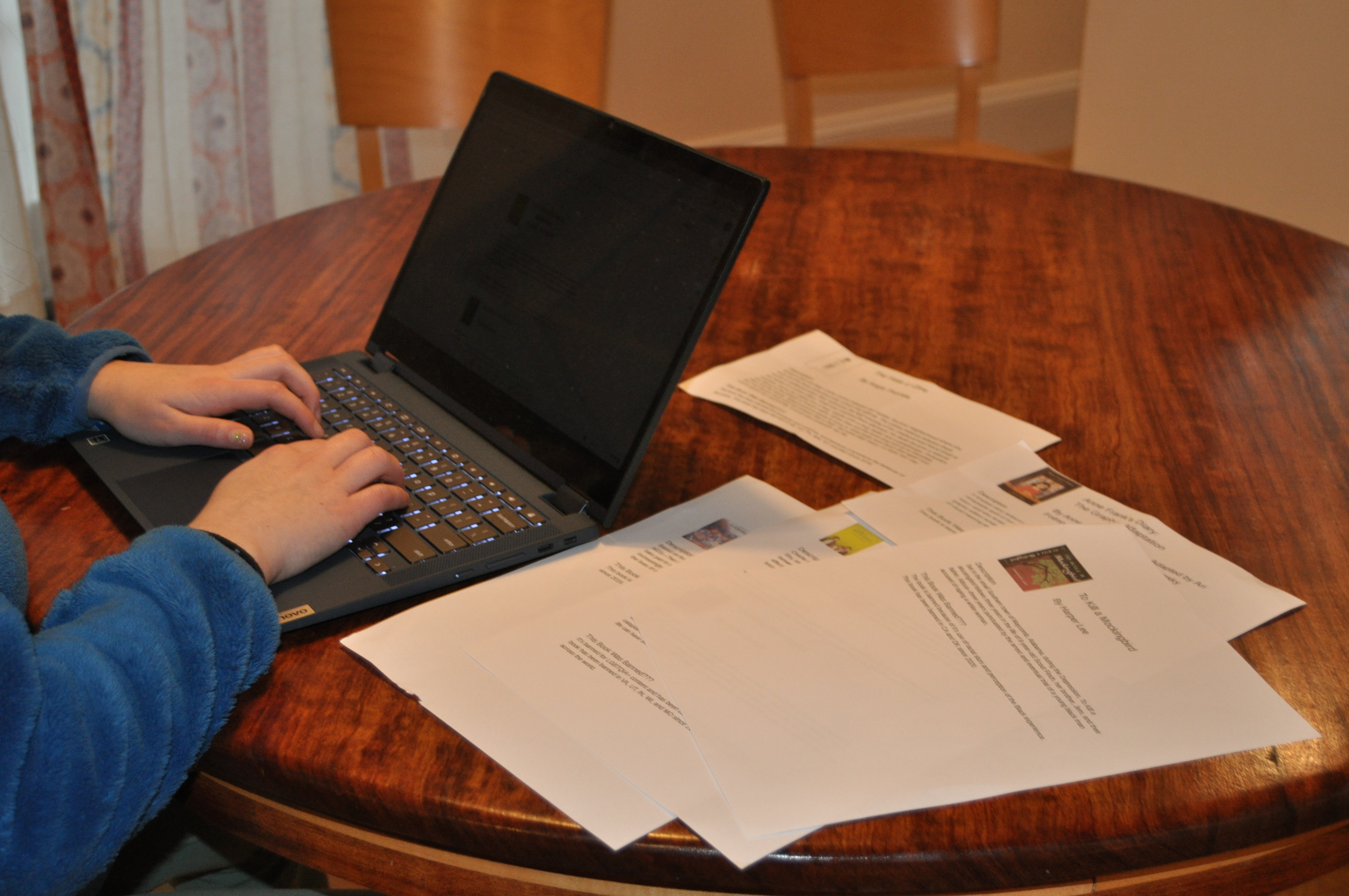
I went to the library and looked online at some writer/author websites.  Pen America was one of the sites, and they have lists and graphs depicting books that are being banned or challenged.  Some of the websites I looked at described why books were being challenged. I picked books from the lists that I wanted to read or had read in the past year.

What books did you pick?

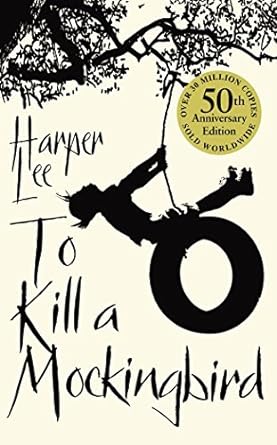
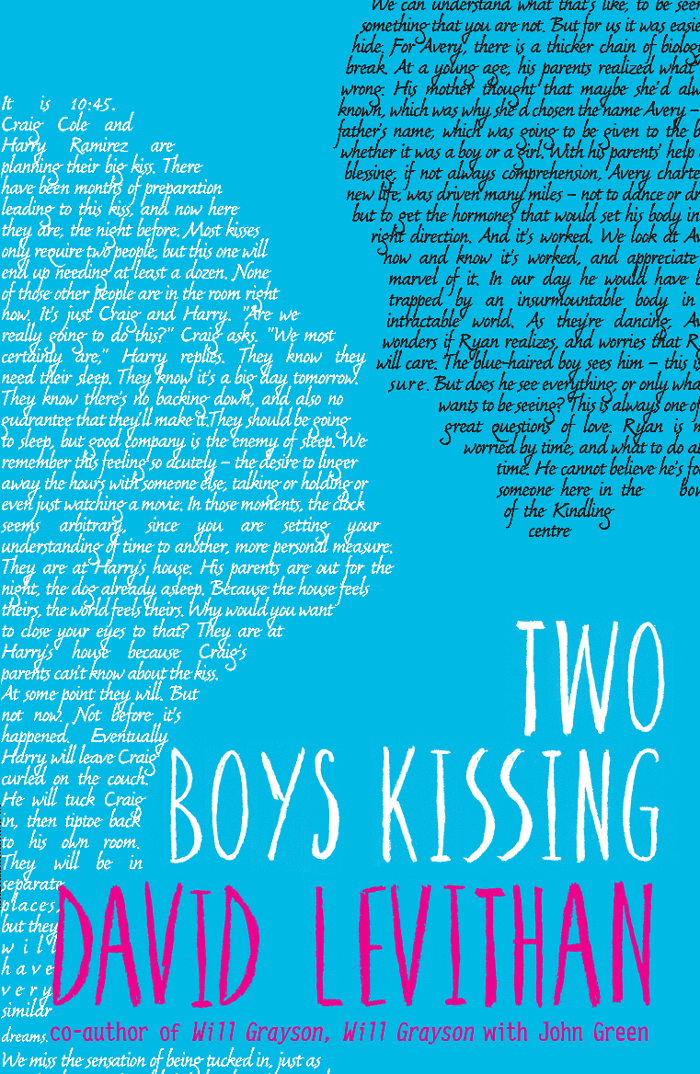
I had bought The Diary of Anne Frank, To Kill a Mockingbird, and The Hate You Give at books sales at my library. I knew that The Hate You Give had won an award. I read The Perks of Being a Wallflower last year. It was on a reading list of recommended books at the library. I picked Looking for Alaska, which is about a boarding school in Alabama with a character named Alaska, because it was written by John Green. John Green wrote The Fault in Our Stars which I really liked. I forget how I picked Two Boys Kissing. It’s a story about two boys who decide they are going to try get into The Guinness Book of Records by beating the existing record for the longest kiss ever.
How long was the existing record?

Thirty-two hours.

Did they make it?

Read the book!

Good idea!  How did you figure out how to make sugar cookies that would symbolize the books you’d chosen?

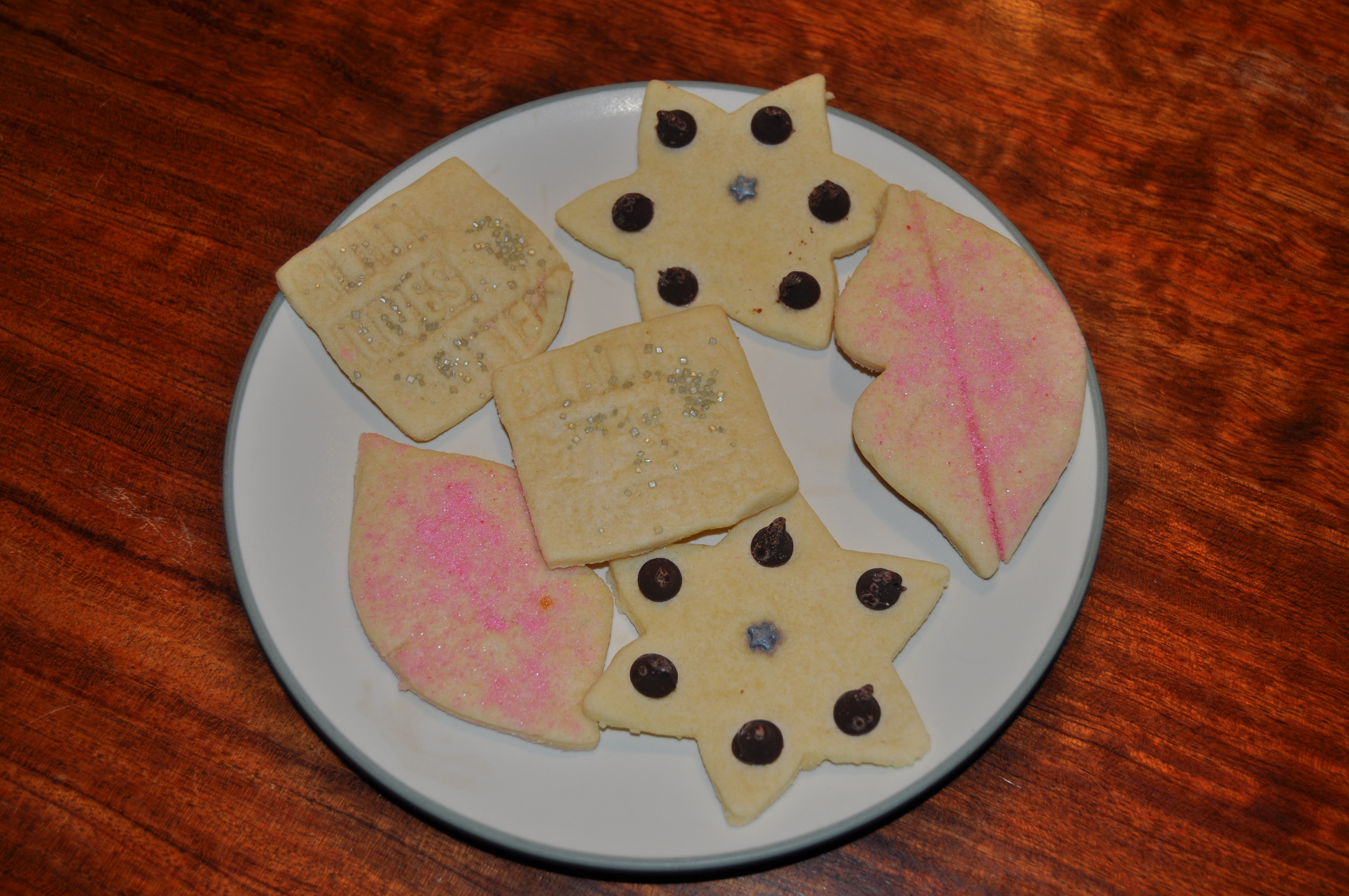
Anne Frank is about a Jewish girl hiding during WWII, so it was easy to use a six-pointed star cookie cutter for that. For To Kill a Mockingbird, I used a bird.  My mom got a cookie cutter on Etsy that said “Black Lives Matter” that we thought would work for The Hate you Give.  We used a cookie cutter shaped like lips for Two Boys Kissing.

What else did you do?

We offered six different cookie shapes in batches of five, each for ten dollars. I researched why each book was banned and wrote or cut-and-pasted a short description of the book and why it was banned, and I placed that description in each box of cookies.
What were you hoping would happen as a result of your project?

I wanted to raise awareness and maybe change the behavior of some people.  Everyone, at least my age, likes cookies, so I thought that would be a good draw as well. 

How did you get customers for your cookies?

My mom and I created an order form and sent it to her friends and our neighbors and some writers that she knows.  I also told my friends about it. 

Did that work?

Yes, we got a ton of orders. I think we made over 500 cookies!  It took us three days to make the cookies and package them up, and then we had to deliver them.  My Mom and Dad did most of the delivering.  The project made over $1800 that I am donating to Pen America. 

Wow. What did your customers say?

Some of them were impressed by the project.  The kids really enjoyed the cookies. At least four people told me that, as a result of my project, they were going to read the books that I described.

What if someone else wanted to make banned book cookies as a project in their community or library, how would you feel about that?

I think it would be fine!  The more people know about the book bans and book challenges, the better.

Note: In late February, Nutmeg and her mother traveled to New York City to present her donation and chat with the CEO of Pen America. 

If you or someone you know has a worked on a creative response to book banning,  I would love to hear about it.
(Not) Bartering the World

Although I recently retired from the practice of law, climate change and environmental issues, civil rights, women’s issues, and inclusivity continue to inform my writing and work as a book artist.

In the past decade I have written several articles and essays on climate change have made a number of large and small art works exploring man-made climate change and their impacts on our oceans, earth, weather and atmosphere, plants and animals, people, and the future of our world.  I thought I was done with what I had to contribute to the conversation on this topic, but in January I received a call for submissions from Unbound Visual Arts, in Allston, MA. Their gallery is located across the street from a progressive elementary school, and I have been puzzling about ways to make climate change more palpable and personal to people whose lives tend to be focused on other things. I decided to create a piece that can be used by teachers, children, and adults to individually or as a group to vividly imagine the real-life consequences of climate change on themselves, their classmates, and others like and unlike them across the world.

Bartering the World is an assemblage created from things I recovered after severe weather events, including inland floods, wild fires, beach storms, droughts, other climate changes between 2021 and 2023 which were likely caused or amplified by intentional human activities. Rather than house it in a conventional frame, I decided to make an archeological box as if a future child or parent were coming upon items from our present / their past. Along with the piece, I included questions to prompt conversation, group or individual class assignments, and to help bring home the different ways in which climate change affects all of use.

Below the photograph of the piece, is a portion of the question/ prompt sheet.

Specific items chosen for this piece include:

  • Eleven items found in everyday children and teenagers’ home and school lives which are no longer in their owners’ homes.  How many can you name? 
  • Nine things belonging to live beings affected by climate change.  (These are all found items; no living thing was hurt by the making of this piece.) How many can you find? 
  • Three items that are part of industries that contribute significantly to climate change. How many can you name?  Can you name others?
  • At least seven items that have important symbolic value to humans and/or humankind. How many can you identify?

I have attached a link to the answer sheet, so that you can see how many you have identified. Hint: some of them are used in more than one category/ question. UVA 2023 Bartering the World Answer Sheet Only

Of course, the first thing a student asked me was, “Why Is It Called Bartering the World?” The reason is, that often we don’t realize that our everyday actions have an effect on the climate, and that we are unconsciously “bartering our world away” whenever we use fossil fuel energy we don’t need to use, waste water, throw items on the ground that could harm wildlife, etc. Similarly, we can all stop bartering our world away (or reduce our bartering) by making simple changes in our everyday lives.

The closing reception for the Climate Equity Show show at Arthaus, the Unbound Visual Art Gallery, ended yesterday, so I an now able to lend it to others who are interested in viewing or using it and the accompanying materials.

If you would like to borrow the actual Bartering the World assemblage, photographs of the assemblage, and/or the question and answer sheet, or you would like me to come and “teach” a storytelling class that includes a little information about how I made the piece and a group story telling exercise about a possible family that could have left behind the objects in the assemblage, please contact me via this website, and we can figure out what works for both of us.

Winter’s Beholding


ice dam on deck floorThis morning I took pictures of the hundred pound hunks of ice that slid off my roof and splintered our wood deck, to add to the pictures of the water-swollen ceiling that we punctured with a turkey baster to prevent it from collapsing in the night and killing our dog. As I drove to work, the sun glittered through a canopy of ice-spangled trees. Last year this morning landscape would have taken my breath away, but today the snow feels like a predatory beast that crushes roofs, creates car accidents, and leaves potholes that make my street look like a mine field. Fifteen foot icicles that I would have found enchanting last December evoke a piercing sorrow in my chest for everyone who has lost barns, ceilings, savings, gas lines, cars, even lives to the snow.

When I’m not projecting myself into the hearts of homeowners with ice dams, I’ve been working on a talk for this year’s Associated Writing Program Conference on speculation in literary nonfiction. So I’ve been thinking a lot about truth and speculation, and how slippery and elusive truth is, which has led me to wonder about the parallels between truth and the once-beautiful ice.

Truth is relative, philosophers advise, and the Greeks realized that beauty is in the eye of the beholder in the 3rd century B.C. My experience with this winter’s snow tells me that beauty is not only dependent upon the beholder, but that the beholder’s perception varies. Not only does the beholder count, context counts. And yet, despite the variability of subjectivity, truth and beauty are not a free for all. There’s something that feels hardwired when we recognize truth and gape at beauty.Snow in winter 2015

Some things are not true. We recoil at obvious lies because humans need to live in community, and thus, to trust one another. But the impulse to seek an advantage in the evolutionary game of survival-of-the-fittest makes for a constant unsettling dynamic between trust and guile. Some things are ugly. We naturally recoil at excrement, infection, and blood and guts. No doubt this is protective: excrement and infection can make us sick, and blood and guts is usually sign of danger or death. But there are exceptions, a surgeon seeing through a different lens admires a beautiful a line of sutures as a work of art. Where I might see pain and destruction, she sees a stitching toward life.

To return to the snow— I used to see snow as a gentling of light and shadow, a time when things slowed down and nature’s rhythms became more pronounced, stirring and quieting me. Snow reminded me of the continuity of seasons and life. It turned, and beauty drained from the snow banks, when I started seeing them as pernicious and dangerous.

“Beauty is truth, [and] truth, beauty,” wrote John Keats. But when I ask several of my artist friends what they think, none of us are ready to declare them equivalents. The palpability, magic, mystery, and elation we feel in the presence of truth and beauty seems to involve a weaving of disparate elements into a coherent whole, but there still seems to be a difference. Beauty starts with perception; the harmonious relationship of elements seems to be outside of the self, and then is confirmed by every nerve in my body. To perceive beauty I must open myself to the world, or a piece of art, or a passage of text. In that moment of perceiving beauty I am married to the work. In contrast, my recognition of truth starts within—I feel sensations piqued by various facts, impressions, and emotional fragments align to confirm that this (whatever “this” is) is true; this is reality. And the “this” refers (at least in part) to something in the external world. Beauty feels like it comes from outside the self; truth feels like it comes from within. We cannot consciously capture all that we perceive, or all that we are, but in an experience of truth or beauty for a moment we are at one, the world is at one, we are at one with the world and simultaneously aware of the whole and the parts.

Of course what is true, coherent, synchronous and harmonious in one moment and context will not be in the next. Today the snow is dirty and I am not happy with my writing. To find beauty in winter or in words, I will have to look, perceive, reframe, and open myself up again. As frustrating as this is, it assures me that neither the search for truth, nor art, will ever end or die which is as good a place as any to begin a blog so intimately committed to both. Snow in winter 2015